

An Hour of Connection
Stand in the Circle Webinar
You're doing everything you're supposed to, and you still end most days feeling oddly far from your own life. This free hour is about why disconnection happens, and the one-minute practice that can bring you back into connection.
60 minutes · watch anytime With Dr Rosalind Watts ·
Clinical psychologist · former clinical lead on a psilocybin trial for depression at Imperial College London · creator of the Watts Connectedness Scale
YOU'VE TOUCHED IT BEFORE
From the outside, you're managing. You keep everything running. You answer the messages, you show up for the people who need you, you get it all done. But there is a distinct lack of connection to it all. Your body is present, but where are you really?
Every so often, something cracks you open, and for a little while you feel here: alive, close to people, in your own life. Then normal closes back over it.
After enough of that, it can start to feel like the connection was the exception and the distance is the truth. It isn't. The opening was real. What's missing isn't willpower, it's somewhere to keep it.
You may be struggling with disconnectedness if you're busy all day and rarely fully in any of it.
You have conversations where part of you is somewhere else, half-holding something back.
You finish a packed day having done a lot and felt almost none of it.
You spend more time in your head than actually here.
You've tasted real connection, and you can't seem to make it stay.
(You finish a packed day having done a lot and felt almost none of it)
IT ISN'T A DISCIPLINE PROBLEM
Today’s society is built like a pyramid
Everyone climbing, performing, comparing, managing how they appear, because needing help reads as weakness. Most of us have lived in it so long we mistake it for life itself. The pyramid is pressure, and it's the voice that says everyone else is coping better than you.
I’d like to invite you into the circle
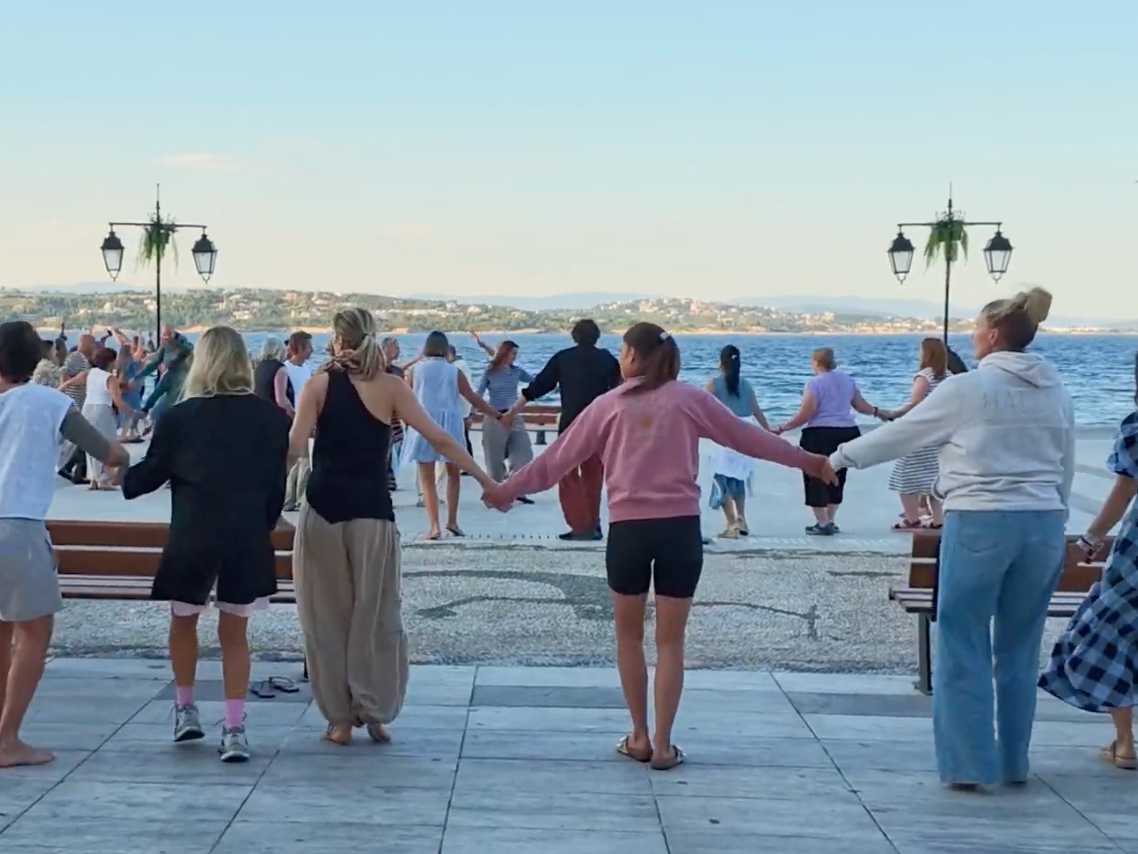
The circle. People around a fire. A council. A room where everyone can see everyone, no one is performing, and honesty is worth more than looking fine. For almost all of human history, this is how we lived, and how we healed.
WHY DR. ROSALIND WATTS?
In her research, she found connection wasn't a side-effect of healing. It was the mechanism.
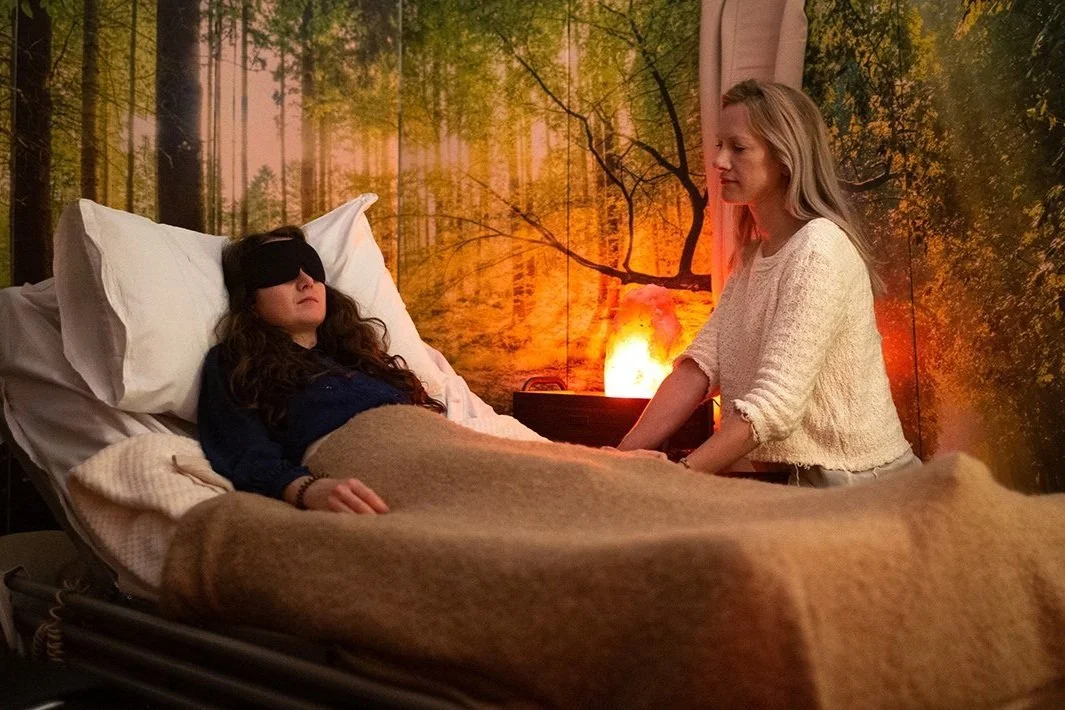
For years, Dr Watts (Ros) led a psychedelic-therapy trial for treatment-resistant depression at Imperial College London. People who'd been unwell for years kept describing the same thing as they recovered: they felt connected again- to themselves, to other people, to the living world.
Connection, it turned out, wasn't a pleasant side effect of getting better. It was the mechanism.
She built the Watts Connectedness Scale to measure it, and founded ACER, a community designed to help people keep it. She's careful with what she promises: this work doesn't guarantee your life will change. It builds the conditions in which it can.
15 cigarettes a day. That's the mortality risk the US Surgeon General has compared loneliness to.
We spend nearly half our waking hours thinking about something other than what we're doing- and it tends to make us less happy.
8 decades of research later, the strongest predictor Harvard found of a long, healthy, happy life was the quality of our relationships.
WHAT YOU GET IN THIS HOUR
Real, embodied techniques and tools. Not sixty-minutes of theory you'll have forgotten by dinner.
You'll leave having done three real things.
-
You'll take the Watts Connectedness Scale and get a clear reading of your connection to yourself, to other people, and to the living world. Most people have never had this named, let alone measured. It's the first real map of where you are.
-
It's called Three Hands, and it takes one minute. Ros guides you through it, and shows you the ordinary moments it's built for: the reach for your phone, the pause at your own front door, the breath you forget after caring for everyone else.
-
Here's the honest part most webinars skip. On your own, you can shift your connectedness a little. To truly change it, and keep it, you need other people, structure, and time. Ros shows you what that looks like, and people who've lived it tell you plainly what changed.
A FEW OF THE THINGS YOU’LL WALK AWAY KNOWING
✓ The one-minute practice you can do at a red light, mid-meltdown, or before walking into a room you're dreading.
✓ Why the open, alive feeling after a retreat or a breakthrough fades so fast, and the single thing that keeps it from slipping away.
✓ The difference between self-love and self-acceptance, and why one of them actually works.
✓ What "being witnessed" means, and why it heals things that advice never could.
✓ The reason low connectedness scores are common, completely normal, and faster to move than you'd think.
✓ How your nervous system responds to the energy of the people around you, for better or worse.
✓ Why your evenings of numbing aren't a willpower issue, and what to build around the urge instead.
✓ The shape almost every modern system pushes you into, and how to step out of it on purpose.
Register for the Webinar
If you're tired of holding it together alone, give yourself this hour.
You'll see where your connectedness sits right now, leave with a practice you can use today, and glimpse what becomes possible when you stop carrying all of it by yourself.
Free to watch · Start and stop anytime · The practice and resources are yours either way